Glamping promises the best of both worlds: a real bed and a roof of canvas, with nature right outside the door. Yet first-timers often get it wrong in one of two directions. Some arrive with suitcases full of outfits they never wear, while others discover too late that they have no warm layers for the evening and no light for the walk to the bathroom.
This practical checklist takes the guesswork out of a glamping trip. We start with how to match your packing to the season and find out what your site already provides, then work through clothing layers, gear and lighting, toiletries, comfort extras, and smart packing tips. Follow it, and you will fit everything you actually need into one manageable bag — and skip everything you don’t.
Before You Pack: Match Your Glamping Trip to the Season
The first packing decision happens before you touch your suitcase: figuring out when you are going. In most temperate regions, peak glamping season runs from May to September, when nights are milder and days are long. If your stay falls in the shoulder months instead, plan for noticeably warmer layers, because evenings and mornings can feel like a different season altogether.
Next, find out what the site provides. Many glamping tents come with real beds, linens and towels already set up, which means you can leave bulky bedding and bath towels at home. A quick message to the host before you pack can save you half a bag of space.
Book early, then confirm the details
Summer weekends at popular glamping sites fill up fast, so book 2-3 months ahead to secure your dates. Once you have a reservation, confirm the amenities that shape your packing list: is there heating in the tent, electricity at the site, and cooking facilities or a kitchen you can use? A tent with a heater and outlets calls for a very different bag than a rustic platform in a field.
Finally, plan around temperature swings. Even in midsummer, night temperatures can fall 10-15°C below daytime highs. A t-shirt that feels perfect at lunch may not be enough when you are sitting by the fire after dark, so your list should always assume the evening will be colder than the forecast suggests.
Clothing: The Layering System for Glamping
Glamping clothing is all about layers, not outfits. The goal is to stay comfortable through a day that can start chilly, warm up by noon, and turn cold again the moment the sun drops. Rather than packing a different jacket for every scenario, build your wardrobe around three layers that work together and can be added or removed as conditions change.
Start with a moisture-wicking base layer against your skin, add a warm mid-layer such as a fleece for insulation, and finish with a wind- and rain-proof outer shell. With those three pieces, you can adapt to almost any weather without carrying a bulky coat for each condition. Choose neutral colors that mix and match easily, so every item pairs with the rest of your bag.
Your clothing checklist
- One warm hat and a pair of gloves — even on summer trips, evenings around the fire can get cold enough that you will be glad to have them tucked in a side pocket.
- Two pairs of shoes, maximum — sturdy waterproof footwear for trails and muddy ground, plus something comfortable and light for the tent, deck and communal areas.
- Quick-dry fabrics only — materials that dry overnight let you pack one outfit per day plus a spare, instead of doubling everything in case of rain or a spilled drink.
- A 40-50L bag for a 3-5 day stay — this size forces you to be selective and is still easy to carry from the parking area to your tent, which is often a walk of several minutes over grass or gravel.
If you stick to these rules, you will have something to wear in every condition and still close your bag without sitting on it. A little planning before you zip it shut pays off the moment you arrive.
Gear and Lighting Essentials
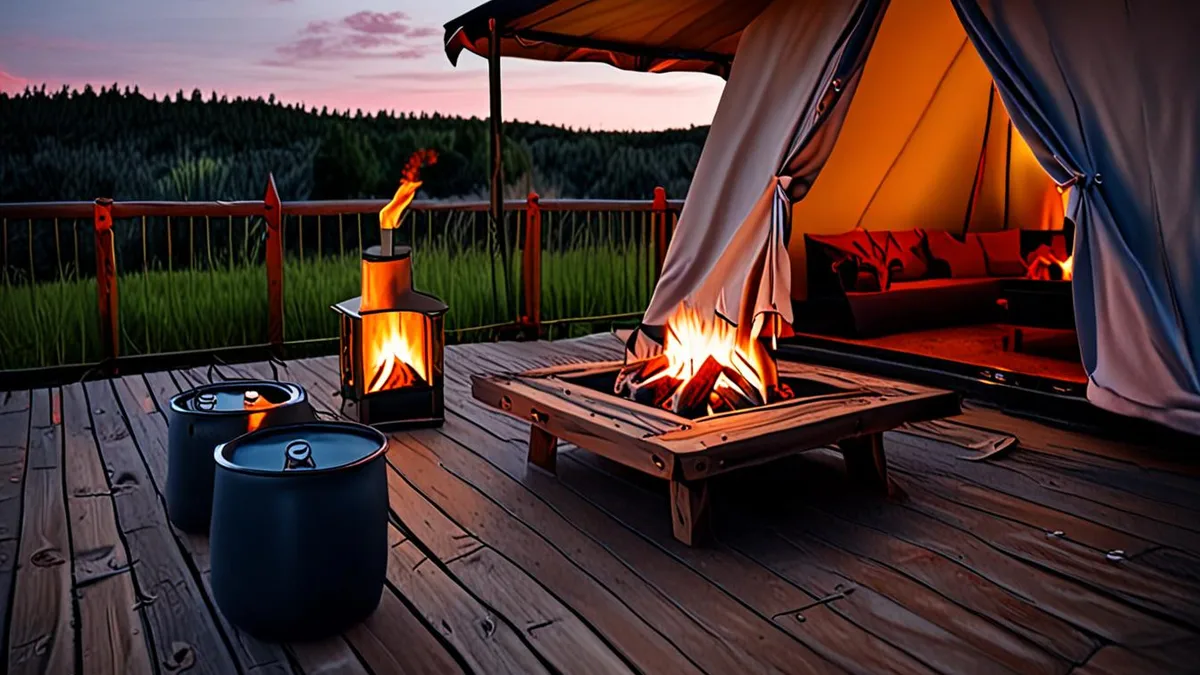
Glamping sites sit in nature, and that usually means lighting and power are limited. Many have dim pathways or none at all, and tented accommodation often has no outlet in the tent itself — or just one shared socket somewhere in a common building. Arriving after sunset without a light of your own means fumbling with your phone flashlight while trying to unzip a tent door, and a phone at ten percent battery is a poor substitute for real gear. A few small items in your bag solve both problems and make the whole stay smoother, from that first dark walk from the car park to your last night reading in bed.
A headlamp or small lantern with 200-300 lumens is plenty for camp use: bright enough to find your way to the bathroom after dark, light enough to read in bed without blinding your tentmate. Hands-free lighting matters more than you might expect — a headlamp leaves both hands free for cooking, zipping tents and carrying things. Bring one per person, and put fresh batteries in or charge it fully before you leave home, so nobody discovers a dead light at midnight.
Practical gear worth the space
- A fully charged power bank — with outlets often shared or absent, this keeps phones, cameras and headlamps topped up without a trip to the communal area.
- A reusable 0.75-1L water bottle per person — most sites have refill stations or a tap, so one sturdy bottle covers typical daily needs without buying bottled water.
- A compact daypack — small enough to fold flat in your main bag, but ready to carry water, layers and snacks on hikes away from camp.
- A dry bag or zip pouches — canvas tents breathe, and morning dew settles on everything near the walls; sealed pouches keep electronics, passports and documents dry overnight.
None of these items is heavy or bulky, and together they take up less space than a single pair of shoes. Each one earns its place the first evening you arrive in the dark with a phone at ten percent — and each one costs far less than the inconvenience of doing without it.
Toiletries and Personal Care at Camp
Glamping gives you a real bed and often running water nearby, but toiletries are still your responsibility — and what you bring matters more than at a hotel. Many sites, especially eco-focused ones, sit on limited plumbing or septic systems, so standard products can be hard on the environment and the drains. Biodegradable soap, shampoo and toothpaste in travel sizes solve both problems: they are gentler on the site and take up almost no room in your bag.
Towels are the other big question. If you have not confirmed that linens and towels are provided, pack a quick-dry microfiber towel — it wrings out fast, dries overnight and weighs far less than terry cotton. Round out your kit with lip balm and a small moisturiser, because outdoor air, wind and campfire smoke dry your skin out faster than you expect, even in warm weather.
Two items top nearly every glamping guest’s “wish I had brought it” list, and you will want both from the first evening onward:
- High-SPF sunscreen: you spend more time outdoors than on a typical trip, and cloudy skies still let UV through, so apply it each morning before you head out of the tent.
- Insect repellent: dusk around water, tall grass and woodland sites is prime biting time, so spray before the fire is even lit and keep it near the tent door for reapplication.
Finally, add a small first-aid pouch so minor problems stay minor. Blister plasters are the most-used item on any trip that involves trails, followed by pain relievers for the inevitable headache and antiseptic wipes for cleaning scrapes or hands before dinner. It all fits in a zip pouch the size of your hand.
Campsite Comfort Extras That Elevate the Stay
Glamping is comfortable by design, but the little extras are what turn a good stay into a memorable one. The bedding provided in your tent usually stays on the bed, so evenings spent outside the tent — around the fire pit, on the deck, watching the sky darken — call for something of your own. A soft throw or dedicated camp blanket keeps you warm and dry while the temperature slides well below what the daytime felt like.
Hot drinks are the other evening essential. A thermos or insulated mug keeps coffee, tea or cocoa warm for hours, so you are not making repeated trips back to the kettle while the fire burns down. And since many sites have no Wi-Fi or TV, plan your downtime deliberately: a small book, a deck of cards or a playlist downloaded before you leave covers the quiet hours better than anything streaming can.
A few extras worth a dedicated spot in your bag:
- Slip-on sandals or slippers: the walk between tent and bathroom at night is shorter and far more pleasant when you are not lacing boots or hunting for shoes in the dark.
- A second small blanket or spare layer by the door: grabbing it on your way out to the fire is easier than unmaking the bed.
- A headlamp-adjacent routine for drinks: an insulated mug with a lid also keeps moths, ash and stray leaves out of your drink while you sit by the flames.
None of these take more space than a rolled sweater, and each one gets used daily. Pack them last, on top, so they are ready the moment you arrive.
Packing Smart: Organisation Tips for a Glamping Trip
A glamping trip does not need a car full of luggage — a single well-organized bag is genuinely enough, even when the stay stretches across several nights. The difference between arriving flustered and settling in easily comes down to how you pack, not how much. Glamping tents often have limited floor space and few surfaces, so one medium duffel that you can carry in a single trip from the parking area is the practical goal. Here is the method that works:
- Roll your clothes instead of folding them. Rolling saves a surprising amount of space and cuts down on wrinkles, which is how a multi-day wardrobe fits into one medium duffel with room to spare.
- Sort everything into labeled packing cubes. Keep clothing, toiletries, gear and electronics in separate cubes so you can pull out one category without unpacking the rest — especially useful when the tent has limited surfaces.
- Load strategically, not randomly. Place your headlamp, an extra layer and your toiletries in the top compartment or outer pocket, because those are the things you need within minutes of arriving, often after dark.
- Leave 10-15% of the bag empty. That space absorbs souvenirs on the way home and gives damp or muddy items somewhere to go without soaking everything else.
Do one final check the night before departure: chargers packed, toiletries sealed in a zip bag, first-aid pouch on top. It also helps to weigh or lift the bag once — if you struggle at home, you will struggle more on a gravel path between the car park and your tent. Ten minutes of organisation buys you a relaxed arrival: you walk in, find your light and your layers in seconds, and the rest of the trip starts exactly as it should.
Ready for the Wild, in Comfort
Glamping offers a taste of the outdoors without giving up comfort, yet first-timers often arrive with the wrong approach: a suitcase stuffed with too many clothes, or a bag missing the very things that make a tent comfortable. The fix is simpler than it looks. A smart glamping checklist comes down to three things: layers for shifting temperatures, reliable lighting and light, multi-use items that earn their space.
Just as important is what you do before packing at all. Confirming what the site provides, from bedding to cooking facilities, keeps your bag small and your arrival stress-free. With the right essentials in one well-organized bag, you can settle straight into the fire, the stars and the comfort, without digging through a duffel for a headlamp. If this checklist helped you pack, share it with a fellow traveler or leave a comment with your own glamping tips.