Booking your first upscale camping trip sounds simple until you start comparing listings. One property shows a canvas lodge on a savanna, the next a glass-domed pod on a mountainside, and a third a round felt tent on open steppe. They all look luxurious in photos, but each glamping tent style behaves very differently once you actually sleep in it.
The structure you choose affects how warm, dry, and private your stay feels, and it can swing the price by hundreds of dollars per night. This guide walks through safari tents, geodesic domes, and yurts one by one: where each style performs best, what they typically cost, and how to read between the lines of a listing. We also cover booking timing, how to compare options beyond the styling photos, and a simple way to match the right tent to your destination, season, and group size.
Why the Glamping Tent You Pick Shapes the Whole Trip
The three main glamping tent styles look similar in marketing photos, but they are built for different conditions. Safari tents, domes, and yurts differ in climate tolerance, privacy, and sense of space, and those differences matter more than any throw pillow or hanging lantern in a listing gallery.
When the wrong tent meets the wrong season
Put the wrong structure in the wrong season and the trip suffers. A lightweight canvas tent in a humid stretch of weather can wake you to condensation dripping from the ceiling. A tent designed for airflow can turn into an oven during a hot spell, while a poorly insulated one can leave you shivering through the night. These are comfort problems no amount of interior styling can fix.
Match the tent to the weather, not the mood board
That is why matching tent style to destination weather should come before anything else on your checklist. Ask what the nights are like at that elevation in that month, how windy the site gets, and whether rain is likely. A tent that thrives in a dry savanna breeze may struggle on a foggy mountain ridge, and vice versa. Once you know your destination’s climate window, the choice between the three styles narrows quickly, and the rest of this guide shows you exactly how each one performs.
Safari Tents: Space and Breeze for Warm, Dry Climates
Safari tents are the classic image of upscale camping: spacious canvas structures set on wooden platforms, often with verandas facing the landscape. Most layouts span roughly 40–60 square meters, which is enough room for separate sleeping and lounge zones, and sometimes even a small dining area. That sense of space is the biggest reason travelers fall for this style, especially couples and small families who want room to spread out.
Built for airflow
What makes safari tents special is how they handle warm weather. Mesh screens keep insects out while roll-up walls let air move freely through the tent, so you sleep in the breeze rather than in a sealed box. This design is ideal for savanna landscapes, desert-edge locations, and coastal areas during their dry seasons, where warm days and mild nights are the norm. If that kind of setting appeals to you, you can see how a desert-edge camp in Morocco puts this canvas style to work in wide-open, arid terrain.
Timing your stay
The key caveat is weather. Canvas needs dry conditions to stay pleasant, so avoid monsoon months at your destination. A soaked tent loses much of its charm, and damp bedding is a real possibility. Check the local rainy season before you book, and aim for the dry window instead. Pricing generally follows the broader glamping pattern: peak-season rates run roughly $250–$800 per night, and shoulder-season dates often come in 30–40% lower. As always, confirm current rates with the operator, since they change from year to year.
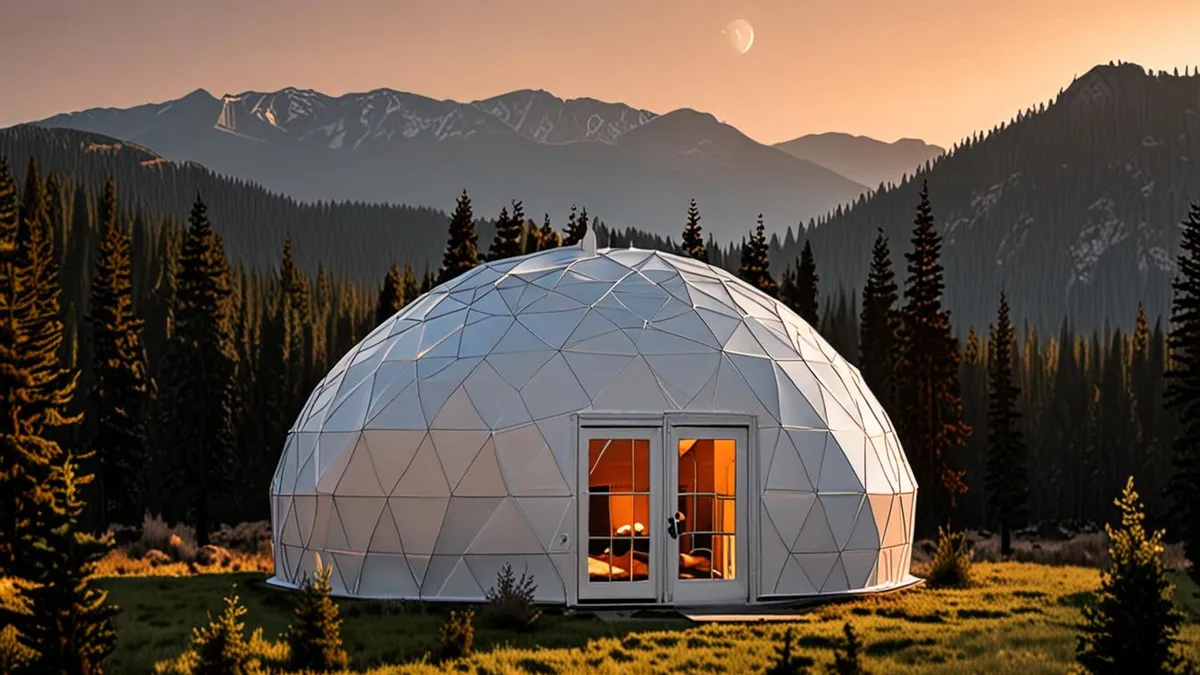
Geodesic Domes: Strength for Wind, Mountains, and Cold Nights
Geodesic domes are the workhorses of mountain glamping. Their aerodynamic frame sheds wind and snow far better than flat-sided structures, which makes domes the top pick at 1,500 meters or above, where gusts and cold nights are part of the deal. While a canvas tent might flap and strain in a ridge-top storm, a dome’s curved panels distribute the load evenly across the frame.
Small footprint, big views
Most domes range from 20–40 square meters, and nearly all of them make the most of it with panoramic windows that frame the landscape from the bed. They are cozy for 2–3 guests, which makes them a favorite for couples and small families who value atmosphere over sheer square footage. If you want room to spread out across separate zones, a dome may feel tighter than a safari tent of similar listed size.
Cost and booking window
Alpine hotspots charge a premium for that view. Expect roughly $300–$800 per night in popular mountain regions during high season, with the top of that range for domes with en-suite bathrooms, hot tubs, or standout locations. Because demand for winter-snow and summer-hiking windows is intense, book 3–6 months ahead if you are targeting December–February or July–August. Last-minute availability in those periods tends to be limited, and what remains is rarely the best-value option.
Yurts: Round Insulation for Shoulder Seasons and Steppe Landscapes
Yurts have been refined over centuries on the open steppe, and that heritage shows in how they handle shoulder-season weather. The traditional build combines a wooden lattice wall with layers of felt insulation, which keeps the interior noticeably warmer than a single-wall canvas tent when nights turn cool. That makes a yurt a strong match for stays in May–June and September, when temperatures swing between pleasant days and chilly evenings.
The round shape also works in your favor. With no corners to trap cold air, heat from a stove or heater circulates evenly, and many guests find the space feels larger than the floor area suggests. Most yurts span 25–50 square meters, which gives couples plenty of room and can squeeze in a small family depending on the bed setup.
Light, air, and the central crown
Look up when you step inside and you’ll see the feature that defines a yurt: the central crown at the top of the dome-shaped roof. It lets in natural light during the day and vents warm air and cooking smells at night. Some operators fit the crown with a clear panel or a closable cover, which matters if you’re staying somewhere with rain or cold snaps — ask before you book.
On price, yurts typically run $200–$450 per night, and they’re often the most affordable of the three styles. If you want an insulated, characterful stay without paying dome or safari-tent rates, this is usually where the value sits.
How to Compare a Glamping Tent Beyond the Photos
Photos sell glamping hard, but they hide the details that actually decide whether you sleep well. A wide-angle shot can make a 25 square meter dome look palatial, and a styled bed says nothing about whether the structure has heat when temperatures drop. Before booking, dig into the specifics that listings often bury in the fine print, because the difference between a memorable night and a miserable one usually comes down to a handful of unglamorous questions.
Start with who is actually sleeping where. Safari tents typically fit 2–4 guests thanks to their separate sleeping and lounge zones, while domes and yurts usually sleep 2–3 comfortably. A “sleeps four” claim on a dome often means two adults plus a fold-out that nobody over the age of ten will enjoy. Ask for the actual bed dimensions and layout, not just the headline number.
- Bed configuration, not guest count: ask whether the second bed is a real mattress, a bunk, or a sofa bed, and whether it’s in the same room or a separate space.
- Heating and cooling: confirm whether there’s a stove, heater, or air conditioning, and whether it runs all night or only when staff are on site — this matters most in domes at altitude and yurts in shoulder months.
- Private bathroom: not every 30+ square meter structure includes an en-suite; some rely on shared washrooms a short walk away, which changes the experience in rain or cold.
- Elevation and wind exposure: a listing that states its altitude and whether the tent sits on an exposed ridge tells you more about comfort than any star rating, since these factors drive both temperature and noise.
One practical habit: message the operator directly with these questions before paying. A fast, specific answer is itself a good sign of how the stay will be run, while a vague or slow reply often predicts how problems will be handled once you’ve arrived and checked in.
Budget and Booking Timing for Glamping Tent Stays
Glamping pricing follows seasons more predictably than most travelers expect. Peak-season rates across all three tent styles sit at the top of the market, while shoulder-season rates for the very same tent often come in 30–40% lower. Shifting your dates by a few weeks can be the difference between a premium price and a very reasonable one, without changing anything about the experience itself.
The catch is that the cheapest dates require the most planning in some cases and the least in others. Popular domes and safari tents in high season sell out early, so reserve those 3–6 months ahead. Shoulder-season yurts are the opposite: because demand is thinner, booking 4–8 weeks ahead is typically enough, and waiting can sometimes surface last-minute deals.
Use the calendar to your advantage
Midweek stays often cost 15–20% less than weekends in the same tent category, and you get a quieter site as a bonus. If your schedule allows a Sunday-to-Thursday stay, you’ll frequently pay less than weekend travelers booking the identical unit. Check the property’s own calendar rather than assuming, since some sites price Friday and Sunday nights differently from Saturday.
A simple rule of thumb: pick your destination and season first, then book inside the lead times above — long lead for high-season domes and safari tents, shorter lead for shoulder-season yurts. That order keeps you from paying peak prices for a trip that didn’t need them, and it frees up budget for upgrades like a longer stay or a tent with better views.
Finding the Glamping Tent That Fits You
Choosing between a safari tent, a dome, and a yurt comes down to matching the structure to your trip’s conditions. Safari tents win on space and airflow in warm, dry climates, domes handle wind, mountains, and cold nights better than anything else, and yurts offer the best value plus solid insulation for shoulder-season stays. If you remember nothing else, remember that season, elevation, and group size are the three filters that narrow the choice quickly.
Start by checking your destination’s climate window, then pick the structure built for it, and finally book inside the lead times covered earlier — 3–6 months ahead for high season and 4–8 weeks for shoulder season. Get those steps right and your first upscale camping trip should feel just as good as the photos promised. If this helped you plan, leave a comment or share the article with a fellow traveler.